The founding complaint
Mem0 began with a complaint so ordinary it almost sounded petty.
Before the company existed, co-founders Taranjeet Singh and Deshraj Yadav were working on Embedchain, an open-source framework for indexing and retrieving unstructured data. They also experimented with a meditation app. The app found an audience, but users kept running into a problem: it could guide them through a meditative journey and then forget the journey had happened.
As Singh later recounted to TechCrunch, users complained that “the app doesn't remember that.”
The technical explanation was statelessness. A language model can respond intelligently to the text placed in its current context window, but, on its own, it does not preserve a durable record between calls. Close the session, change applications, or start with another model, and the continuity disappears unless another system reconstructs it.
The human experience was simpler: the machine made people repeat themselves.
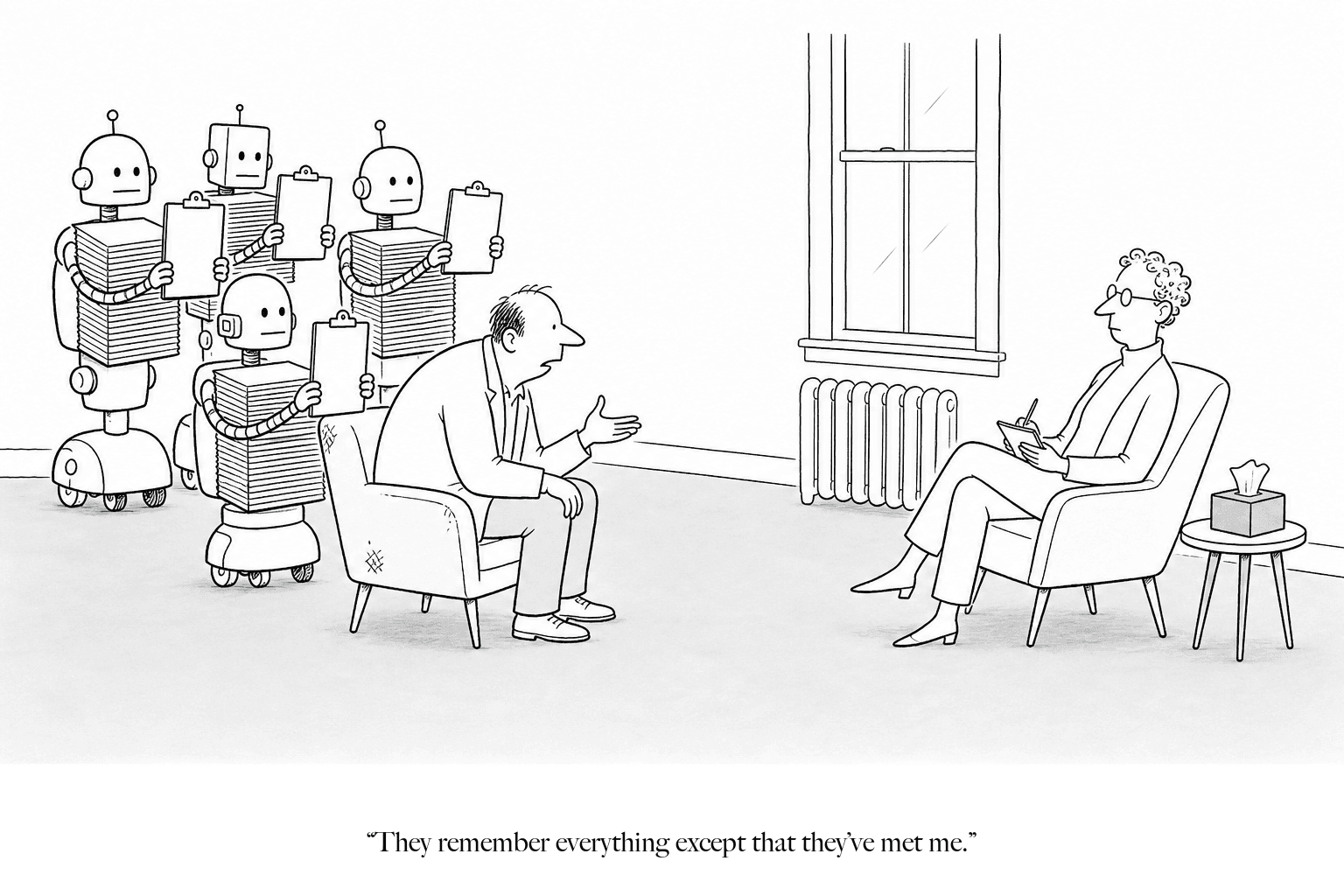
Singh and Yadav turned the problem into Mem0. The initial proposition was personalization. A developer would send conversations to a memory layer; Mem0 would extract important facts, consolidate updates, store them, and retrieve the most relevant ones when the application needed context. The agent could remember a preference without dragging an entire transcript into every prompt.
By October 2025, Mem0 had raised $24 million. In its Series A announcement, the company reported 41,000 GitHub stars, 14 million Python-package downloads, and growth from 35 million API calls in the first quarter of the year to 186 million in the third. Those are company-reported indicators rather than a comparable census of active customers, but they established that agent memory had moved well beyond a meditation-app complaint.


Once an application learns something useful about a person, that knowledge becomes valuable. Once it becomes valuable, the company that stores it can make leaving painful. Singh publicly warned that memory could become a moat for large model providers as the models themselves became more interchangeable. He described Mem0 as a “memory passport”: a layer that could let a user's accumulated context travel across applications and agents.
Mem0's stated principles were increasingly ambitious. Make memory work. Keep it neutral across models and frameworks. Make it portable.
The first principle created the company. The other two could determine whether it survives the category it helped create.
Too Much Applause, Not Enough Memory
Agent memory looks enormous in GitHub stars and unsettled everywhere else.
On July 30, ten prominent memory repositories—including Mem0, MemPalace, Cognee, Graphiti, Supermemory, Letta, and memU—had a combined 301,728 stars. If they were fused into one imaginary project, it would outrank React and Linux. It would also have fewer than half as many forks as Linux. The basket attracted almost ten stars for every fork; Kubernetes attracted fewer than three.
This is a wonderful statistic if your business model is applause. It is a much less useful one if you need to know which system has survived a deletion request at 2 a.m.
The category's spectacle reached an extreme with MemPalace, a local-first open-source project created in April 2026. By July 30, it had 57,877 stars—an average of one every 2.89 minutes across its first 116 days. Its launch paired a vivid memory-palace story with a 96.6 percent LongMemEval retrieval result. The project later clarified an important point: its number measured whether a relevant session appeared among five retrieved sessions, not whether a model correctly answered an end-to-end question. A larger percentage was not automatically a better memory system.
The correction matters because benchmark numbers have become a substitute for agreement about what “memory” is supposed to accomplish. Mem0 reports end-to-end question-answering results. MemPalace reports a retrieval cutoff. Other benchmarks test whether an agent remembers to perform a deferred action, revises a belief after invalidating evidence, resists gradual poisoning, or disambiguates updates in a group conversation. These are not interchangeable tasks.
The category has plenty of leaderboards and no constitution.
That has not slowed its proliferation. One open catalog grew from 72 systems to 81 in 52 days, or roughly one additional listed system every 5.78 days. Its feature matrix contains 6,399 cells. At one minute per cell, a diligent buyer could spend more than 106 hours comparing memory products without testing whether a single one helps an agent finish real work.
The demand underneath the noise is real. An April 2026 451 Research report, licensed for distribution by Zep, said 46.9 percent of surveyed organizations named memory as the top capability they expected from agents. The report also described the market as small, lightly standardized, and exposed to hyperscalers that can bundle memory into their existing platforms.
People want agents to remember. They have not agreed on what should do the remembering—or what should happen when the remembered thing is wrong.

The Boring Database Strikes Back
The strongest competitor to every memory startup is the stack an engineer already understands.
For a solo founder, that may be a Markdown file with a few headings. For a coding team, it may be a repository directory reviewed through Git. For an application tracking a dozen stable traits, it may be a relational table with explicit columns and update rules. For a larger archive, it may be JSONL in Postgres with BM25, a decades-old lexical retrieval method that is extremely good at finding exact names and values.
These systems only know what they record. Good. That makes them easy to inspect.
A developer can open the file. A teammate can inspect the diff. A database administrator can find the row. When the value changes, a deterministic update can replace it. Nobody needs an embedding to learn that a customer's preferred meeting time moved from morning to afternoon.
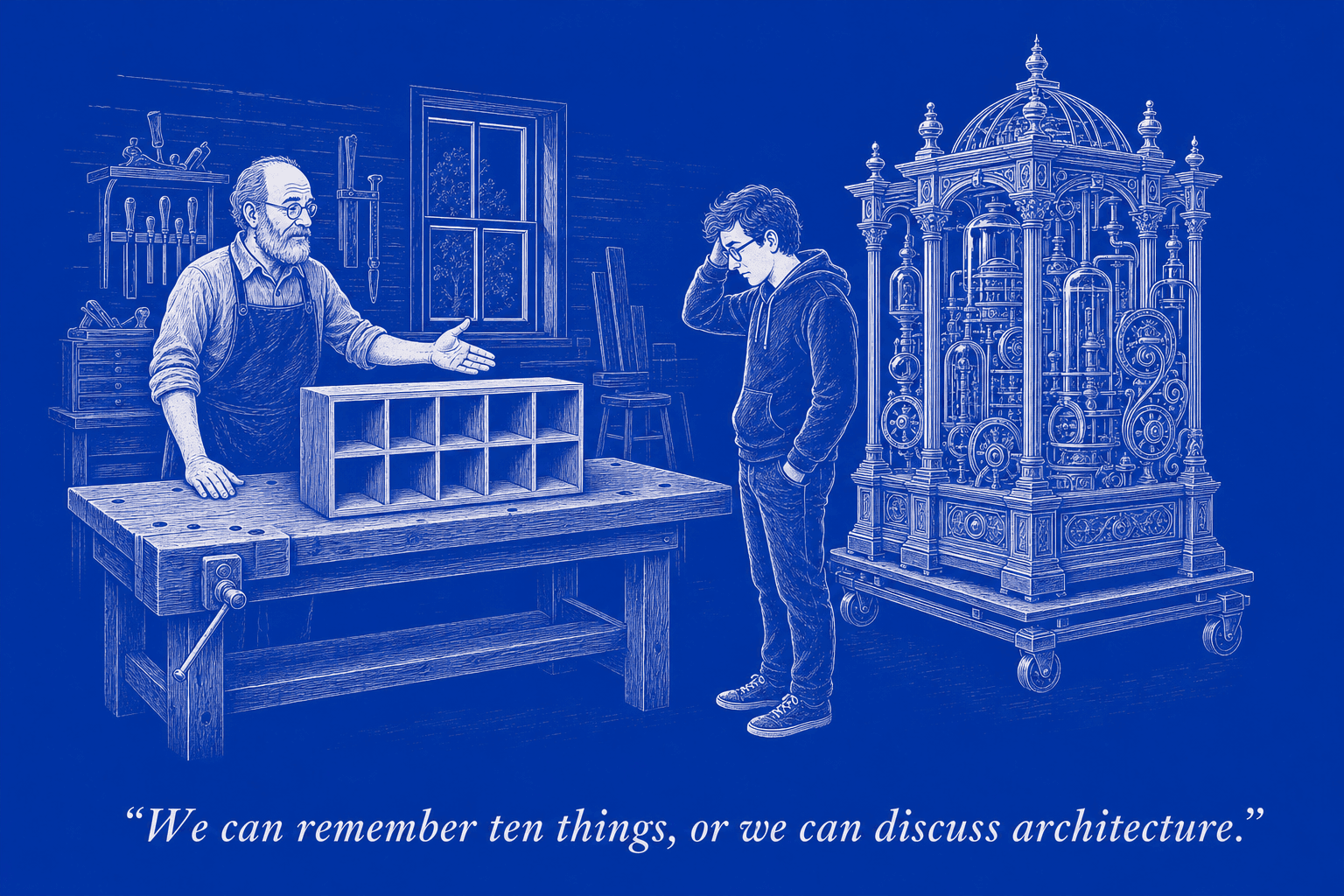
In July, memU made this argument into a launch. The company said it had removed more than 32,000 lines from its architecture, leaving a 474-line core for storage, embeddings, and retrieval. Instead of asking a separate middleware layer to infer everything worth preserving, memU lets host agents write readable Markdown memories and skills. Its adapters span Claude Code, Codex, Cursor, OpenClaw, Hermes, and a generic interface. The performance claims still need independent reproduction, but the product story is clear: the modern agent may already be intelligent enough to decide what to write. The durable layer can be thinner.
For Mem0, the pressure comes from below. If a file is sufficient, an extraction API is overhead. If the host agent can organize its own memory, a second model call may be redundant. If the user can move a directory, portability is a property of the filesystem.
The boring baseline does eventually break. Files become awkward when several agents write concurrently, permissions differ by user and project, a fact is true only during a particular interval, or a deletion must propagate through summaries, indexes, caches, exports, and backups. A simple preferences table is less attractive when the “preference” is really a disputed business rule with three owners and a compliance deadline.
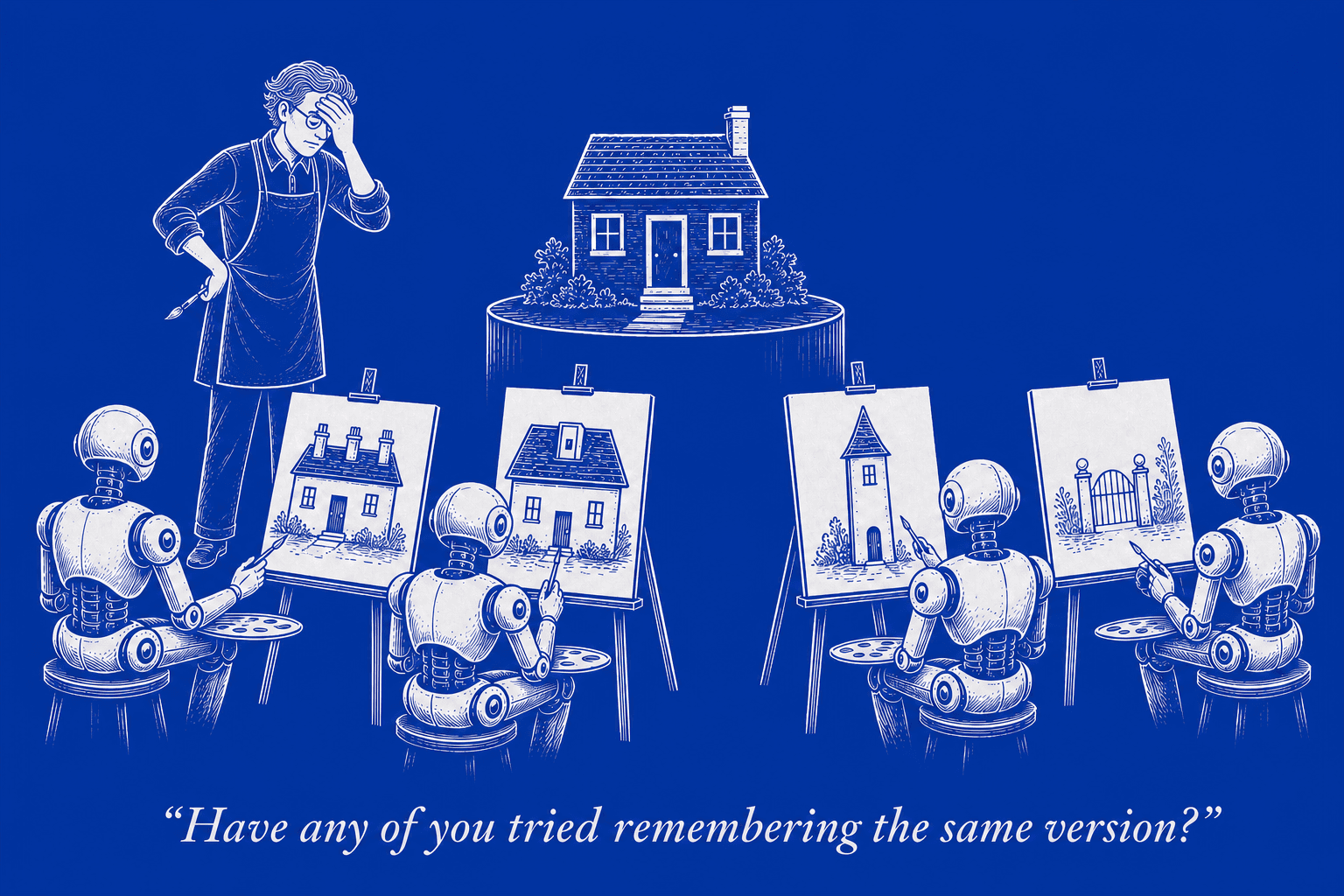
This is the boundary Mem0 has to make legible. A dedicated layer does not earn its place because the application has many memories. It earns its place when a recalled item is allowed to influence something consequential and its authority is difficult to manage directly.
The Write Path
The early memory market obsessed over the read path: embeddings, vector similarity, rerankers, graph expansion, and the number of tokens returned to a model. The harder conversations now begin before retrieval.
Who decided that an observation deserved to become memory?
Consider a user who says, “I hate morning meetings,” after waking up for one bad call. An extraction model may store this as a durable preference. Months later, a scheduling agent retrieves it and rejects a morning slot the user would have preferred. The retrieval can be flawless. The memory can still be wrong.
The same problem becomes more dangerous inside an organization. A conversation says Project Atlas deploys in the United States. The project later moves to Europe, but the old sentence remains semantically similar to every future region query. A vector database knows the old sentence resembles the query. It cannot tell that the sentence has lost its badge and should no longer be allowed in the building.
One practitioner in the July discussion put the distinction plainly: a vector hit may be relevant while being stale, superseded, unsupported, or scoped to another context. Another wrote that “stale confident recall is worse than no recall.”
The emerging requirements look less like search and more like state management:
- retain a source pointer and writer identity;
- distinguish raw evidence from a derived memory;
- record the scope in which the memory applies;
- attach creation, verification, review, and expiry dates;
- represent current, superseded, disputed, and revoked states;
- define what source is allowed to override another;
- preserve an append-only history even when the current view changes;
- delete derived copies, not merely the visible sentence;
- require approval before high-impact state becomes actionable.
This sounds less like an AI companion remembering a birthday and more like databases, access control, and incident response. Persistence turns a model mistake from a temporary answer into recurring system behavior. A poisoned memory can return again and again, looking more authoritative each time.
Compounding risk explains the developer community's anti-magic mood. Once model output becomes durable, legibility stops being an aesthetic preference. It becomes the only way to debug the future.

Four Customers, Four Meanings of Memory
The category looks incoherent partly because different users are buying different versions of the word.
A solo operator wants an AI collaborator that does not forget the project every morning. The operator values local storage, readable state, cheap setup, and an easy way to erase a bad assumption. Cross-device sync is useful if it does not require becoming a part-time database administrator. The likely winner is a file, SQLite, or a local tool like OpenMemory—not a large context platform.
A small team wants several agents to work from the same reviewed decisions. The important memory may be negative knowledge: the library the team rejected, the migration it paused, the customer promise it must not repeat. Team members need authorship, diffs, conflict resolution, project boundaries, and rollback. Git-like behavior matters more than a clever similarity score.
A startup building an AI product wants a clean API, low tail latency, predictable cost, tenant isolation, and freedom to change models. The founders do not want to build connectors, extraction logic, contradiction handling, and deletion machinery from scratch. They also do not want their application's user history trapped inside a memory vendor. This is Mem0's most natural current terrain.
An enterprise wants something stricter. Every read and write needs identity. Retention, residency, provenance, and revocation must survive across systems. A policy change cannot be a suggestion hidden in a prompt. The memory layer must support audit, incident reconstruction, approval, rollback, and different rules for an assistant that drafts text versus an agent that moves money.
No single architecture suits all four. The current cohort evidence points to a principle: use the least complicated system that preserves the control the work requires.
That principle is friendly to Mem0 only if the company is willing to tell some developers they do not need it yet.
A Passport Needs a Border
Portability matters most in Mem0's public story because it moves memory above the applications that create it.
Models are already selected task by task. Coding agents are replaced when a competitor gets better. A person may plan in Claude, implement in Codex, edit in Cursor, and automate in OpenClaw. The interface can change in minutes. The accumulated record of decisions, preferences, failures, and procedures cannot.
That asymmetry creates the control point. Whoever holds the memory holds the switching cost.
The large model providers understand this. A product that remembers a user's life becomes more useful with every interaction and more painful to leave. Singh has argued that providers have little incentive to make that memory interoperable. Mem0's answer is neutrality: the models can change while the memory layer remains.

OpenMemory is the clearest present expression of that answer. It keeps data local, exposes shared operations to MCP-compatible clients, and gives the user a visible control surface. Mem0's export documentation provides bulk retrieval and structured JSON exports for migration, compliance, and inspection. These are real portability primitives.
They amount to the passport's photo page.
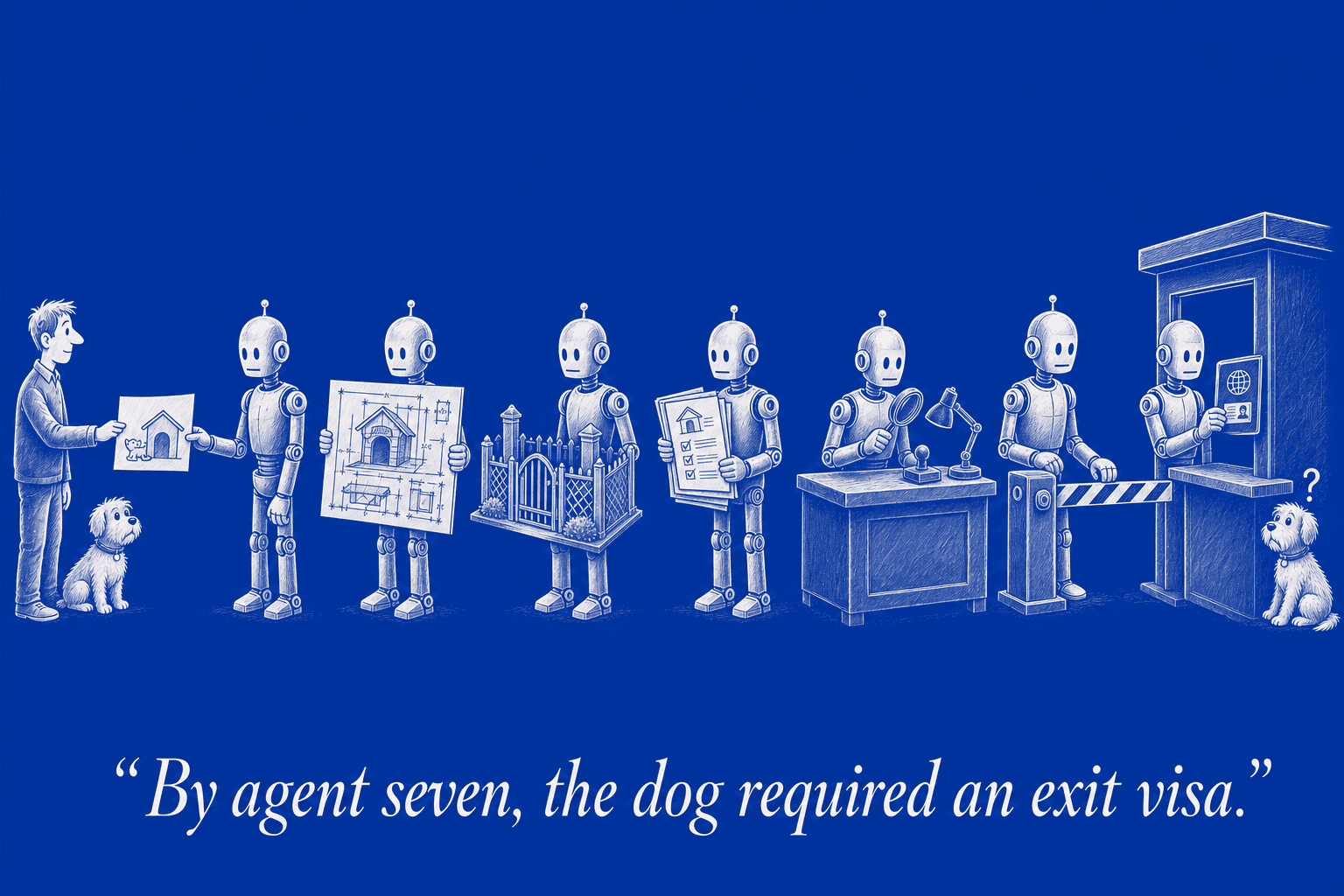
An export that moves text but loses identity, source, permissions, validity, and replacement rules can preserve the words while destroying the memory. Two agents may use the same label for different concepts. A destination agent may import a private preference into a shared project. An old tool instruction may remain syntactically intact but become dangerous in a new runtime.
Portability therefore creates its own security problem. A corrupted memory trapped inside one application has a limited blast radius. A portable corrupted memory can follow a person across every agent they use.

The passport metaphor predicts the missing machinery. A passport earns trust through more than the facts it prints: an issuer stands behind them, a border decides where they are accepted, a validity period limits their use, and a revocation process can make the document stop working.
AI memory needs equivalent semantics, without forcing every agent to queue at passport control: who issued this memory, who owns it, what does it authorize, where may it travel, when does it expire, and how can another system verify that none of those fields were lost in transit?
01 / 14A conversation, document, or tool result creates evidence.
The Vanishing Middle
Mem0 is being squeezed from four directions at once.
Below it are files and databases: cheap, portable, inspectable, and often sufficient.
Beside it are increasingly capable host agents. memU's subtraction thesis says the agent that understands the task should decide what to remember, leaving the storage layer deliberately thin.
Above it are broader context and governance platforms. Supermemory combines documents, extracted memories, profiles, hybrid search, and connectors. Zep and its open-source Graphiti project emphasize bi-temporal graphs—representations that track both when an event occurred and when the system learned it—along with relationships, provenance, and changing business truth.
Around it are hyperscalers and model providers. They can bundle good-enough memory into an agent platform the customer already uses, reducing distribution costs to nearly zero.
The least defensible position is the middle: a generic API that turns messages into embeddings and returns similar text. Files can undercut it. Agents can absorb it. Context platforms can subsume it. Cloud vendors can give it away.

Mem0 has two credible ways out, and they may be the same architecture viewed from opposite sides.
The first is an open portable substrate: a neutral layer developers trust because they can inspect it, self-host it, export it, and leave it. The second is a managed state plane: a service that earns its fee through synchronization, lifecycle rules, permissions, audit, evaluation, reliability, and enterprise controls.
The open layer makes captivity difficult. The managed layer makes complexity affordable.
This is a more coherent portfolio than a collection of adjacent messages about personalization, local memory, production APIs, benchmarks, and enterprise use. OpenMemory can be the local edge. The Mem0 SDK can be the embedded runtime. Mem0 Cloud can provide managed synchronization, policy, and scale.
That final sentence is a strategic proposal, not a description of a finished product. Several controls required to make the architecture trustworthy are not yet publicly proven. But the components already point toward it.
Mem0 earns the right to charge through the hard work of moving, governing, and operating customer data correctly, never by making that data hard to remove.
A Benchmark That Can Break Things
To support that position, Mem0 would need to change what it proves.
The company's benchmark work has helped make memory evaluation concrete. It reports results across LoCoMo, LongMemEval, and BEAM, including a 15.5-point absolute decline between its reported BEAM-1M and BEAM-10M scores as history grows tenfold. The decline is more informative than an immaculate headline because it reveals where scale begins to hurt.
But the next credible memory benchmark should be designed less like an exam and more like an incident.
It should give the system a true fact and then invalidate it. It should inject a plausible lie gradually. It should ask the agent to remember an intention and act only when a later condition is satisfied. It should create two users with similar identities and try to make one retrieve the other's state. It should delete a memory and then search the source record, summary, embedding index, graph, cache, export, and backup for residue. It should transfer the memory from one agent runtime to another and test whether the second agent continues the task without importing stale instructions.
The strongest baseline is Markdown or JSONL with a clean schema, Git history, lexical search, and explicit update rules. If Mem0 cannot beat that system on the customer's actual task after latency, model calls, migration, and operator time are included, the honest result is that the customer should use the files.
Benchmark theater ends when the evaluation can veto deployment.
The useful success metric becomes: “Could a different authorized agent continue the work correctly, with fewer repeated decisions and no stale or private state?” Retrieval is one input, not the product outcome.
When the Agent Has a Body
Portability gets harder as agents multiply.
Gartner forecast in April 2026 that an average Fortune 500 company could operate more than 150,000 agents by 2028, up from fewer than 15 in 2025. The figure is a forecast, not an observed future, but even a small fraction of that growth changes the architecture. Memory stops being one assistant's user profile. It becomes shared organizational state across a fleet of actors with different permissions and responsibilities.
The same shift is beginning in embodied systems. A robot needs more than a record of what a user likes. It needs to remember where objects were, how the environment changed, which action failed, which recovery worked, and whether that recovery was validated strongly enough to reuse. Vehicles, drones, and robots also cannot assume a constant cloud connection. They need local state, controlled synchronization, and a way to prevent one machine's bad inference from propagating across a fleet.
The physical hardware is moving in the same direction. Micron has said an average Level 2-plus vehicle carries more than five times the memory and storage content of an average vehicle, while a humanoid robot could carry ten times that of the L2-plus car. On that rough manufacturer comparison, the ladder from an average car to a humanoid exceeds fiftyfold.
This does not establish robotics as a current Mem0 market. Device-native and closed industrial systems may own the layer. But it clarifies the long-term object. In a software assistant, a stale memory produces an annoying answer. In an autonomous machine, stale world state can produce the wrong physical action.
The future memory layer, whether Mem0 builds it or someone else does, will have to distinguish experience from permission. A machine may remember that an action succeeded once without being authorized to repeat it everywhere.
What Mem0 Is For
Mem0's original answer was personalization. An application should remember a user well enough to stop treating every interaction as the first.
Personalization remains useful and now looks too small.
The company's public language already reaches beyond it. Neutrality means the intelligence provider can change. Portability means the interface can change. Open source and local operation mean the owner can inspect and retain the state. Managed infrastructure means a developer does not have to rebuild the difficult parts for every application.
Together, these ideas describe a company built to make experience survive technological turnover.
But survival cannot be unconditional. A preference should not outlive the person who changed it. A project instruction should not escape its repository. An employee's private conversation should not become organizational memory. A poisoned observation should not become more credible because five agents repeated it. A customer should not have to remain with Mem0 to keep the history that made the product useful.
Portability means the right things travel with their limits attached.
Singh once called the company's longer-term vision “Plaid for memory. That's act two.” The comparison is instructive. Plaid became valuable by standardizing access between institutions while identity, consent, and security remained central to the transaction.
Mem0's equivalent act would require an open interchange contract for memory: raw evidence versus derived conclusions; durable knowledge versus temporary execution state; identity and ownership; source and scope; validity and confidence; permissions and selective disclosure; versioning and integrity; deletion, revocation, and reconstruction. It would need importers good enough to make portability an acquisition channel and exports complete enough to make departure unremarkable.
Mem0 may still fail to own the layer. Files may commoditize the developer market. Enterprise context vendors may absorb memory into existing data and policy systems. Model providers may open their formats or use distribution to win despite lock-in. A neutral standard may emerge without a neutral company at its center.
Mem0 has a rare strategic advantage: its founding problem, public principles, open-source distribution, local product, and managed service can all point at the same future. The work is making that story testable in the product.
The company began with a meditation app that could not remember a user's journey. By the end of this decade, the harder problem may be the inverse. Intelligent systems will remember plenty. The consequential decision will be which parts of a person's, team's, or machine's history are allowed to cross into the next agent—and which must remain behind.
Memory sounds like a record of the past. In an agent system, it is a continuing grant of authority over the future.